Sunday, 5 December 2010

7 Cancun snippets: >machine-guns >Japanese pre-emptive strike >climate talks head in tears >and more

Friends: I'm at the COP16 Conference in Cancun, aiming to talk about climate bonds as a mechanism to divert private investment to building a low-carbon economy. Here are six snippets from my first 24 hours:

1. Cancun's surrounds have that beautiful blue you get in tropical waters, and endless green forest. It also has, as you drive out of the airport, machine gun-armed soldiers lining the street and manning roadblocks on the freeway. A bit chilling; a shadow of the conflicts to come if we get catastrophic climate change. Attending the Conference requires endless bus shuttling between a (well-organised) set of big sheds out in the bush and huge hotel complexes dotted along the coast; the government negotiators are holed up in a vast resort called Moon Palace. Crowds are much smaller than at Copenhagen - lower expectations this time.

2. First big announcement: Japan refuses to extend Kyoto Protocol. Full stop. Kills stone dead the push by G77 countries, including China, to extend the current agreement for another “commitment” period of developed countries paying the developing. Japan says the only agreement it will sign is one that includes binding reductions by China and India, among others. The move apparently came out of the blue for other delegations. China and Brazil are not happy. 

3. Then the World Meteorological Society announces that 2010 was, so far, one of the three warmest on record – and the current cold snap in Europe doesn't change that (part of the increased weather volatility climate change brings). BTW, the three warmest years on record have all occurred since 1996.

4. China this week got a €500 mil loan from the European Investment Bank to invest in renewable energy. Good stuff - but such a pity the Bank also just lent €550 mil for coal-fired power in Slovenia. How do we get the right hand working in concert with the left hand?

5. The head of the UN climate talks body apparently fought back tears in a meeting with youth activists on Wednesday. After talking about the lack of ambition among global leaders for an agreement among economic and political constraints, she was asked what keeps her going. She choked up as she answered “the next generation”.

6. Meanwhile the negotiators labour their way through the various texts of draft agreements, with interminably polite arguments about [bracketed] text - the sections they haven't yet agreed on. For example there was a lot of to and froing today as G77 countries pushed to have the word "increase" taken out of brackets in a clause about funding "capacity-building". In another EU seminar on climate finance a speaker was explaining that developed world debt would be up 120% this year, while developing world debt would go down 40%. It may be seen as unjust by the G77, but there seems little chance of having that work "increase" taken out fo brackets.

7. The Koreans on the other hand are staying optimistic. Last year they spent more of their economic stimulus budget on green investments than anyone else. At a Korean Global Green Growth Institute seminar today their former Prime Minister explains how they're working with a number of developing countries on investing to create a low-carbon economy that delivers greater prosperity. Nick Stern chaired the session, touting Korea as the case example of how to do it right. Perhaps they can advise recalcitrant countries like Australia and Canada as well?

Cheers,

Sean Kidney

This is the first of an occasional update during COP16.
> Please pass on as you see fit.  
>> Snippets are also posted online at the climate bonds blog. 

Thursday, 4 November 2010

New York Times story on Climate Bonds

Note comments by Sean Kidney.

First time the International Herald Tribune and the New York Times have covered the issue in this fashion. Story begins:

"SINGAPORE — Financial experts may debate how much it would cost to shift the world to a low carbon economy, but they agree on one thing: the amount would be phenomenal. The International Energy Agency in Paris, for example, has estimated that it would take $46 trillion in additional clean-technology investments over the next 40 years to halve carbon emissions by 2050.

Today, funds mobilized to address climate change are primarily coming from the private sector. While there is also some public investment, there remains a clear gap between what is needed to deal with climate change and what is available. How to close that gap has become a subject of intense debate."

Also mentions the Climate Bonds Initiative:

"Sean Kidney, chairman and co-founder of the Climate Bonds Initiative — an international network that advocates raising money through the bond market for climate protection projects — argues that “themed” bonds have long been a way to raise large sums of money for specific purposes."

Monday, 1 November 2010

About forests and trees and pension fund myopia

Fiduciary duty for a pension trustee is about protecting the financial interests of fund members in the long term. Or, in the language of the pensions world, “maximizing risk-adjusted returns over the long term, consistent with the interests of participants”. Why then do pension funds spend more time looking at the trees rather than at the forest? > Read More

Friday, 15 October 2010

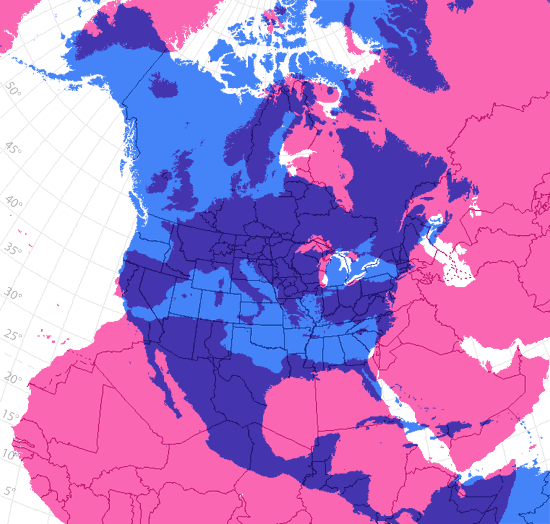
Cool map of Africa vs other countries, plus a few others

Information Is Beautiful


The True Size Of Africa
Posted: 14 Oct 2010 10:08 AM PDT
The True Size Of Africa
Brilliant infographic from Kai Krause (perhaps the Kai Krause?) to combat rampant 'immappancy'
(Now corrected for map projection errors by marauding carto-nerds – thanks Manuela Schmidt)
I would perhaps twin it with these:
True Size Of USA

True Size Of Antartica

True Size Of Australia
(Credits: USA – unknown, Antartica – NASA, Australia – unknown)

Thursday, 7 October 2010

Act now or face trillions in climate asset losses, UNPRI-backed report tells long-term investors


New UNEP Finance Initiative report says long-term institutional investors could see trillions wiped off their assets unless they force companies, regulators and asset managers to reduce the impact of climate change.

Useful reminder of the real systemic risk pension funds need to be looking at.

Wednesday, 6 October 2010

Great little climate chart

Tired of obscure tables of temperature anomalies and confusing maps of summer sea ice volumes?

Here's a simple chart that ordinary Americans can relate to - the proportion of record highs to record lows at individual US weather stations since the 1950s.

2009 National Center for Atmospheric Research study of 1,800 weather stations in the 48 contiguous United States over the past six decades (see Record high temperatures far outpace record lows across U.S.

Tuesday, 5 October 2010

What a kafuffle about the withdrawn 10:10 videos!

I must admit I found the videos pretty dark and whacko.

It did make me think about the seriousness of it all (so it met their objective to that extent), but for the life of me I couldn't figure out the logic. If I'd been advising them I'd have suggested road-testing it on small audiences first to see if people reacted the way they hoped they would. I can't believe they did this; could have saved a lot of hassle.

The over-riding take-away isn't about how serious climate is, but about the people who have the power to press that red button - the video ends up being a reinforcer of the mad idea that uncompromising idiots/eco-fascists have taken it upon themselves to decide that climate change is real and tell us what to do or else. I felt I could be a victim myself if I didn't toe a particular line about what needed to be done, despite what I thought.

The video ends up being more an 
advert against climate change campaigners; and all the loony blogs have lapped it up, frequently using the term eco-fascists. It is, unfortunately, a brave effort that ends up as an own goal. 

Of course you can never be sure about viral media - if it's so outrageous that millions look at it, and end up arguing its merits, then it won't matter how it's seen: what will matter is that millions started arguing about something they've been ignoring.

Against that idea I've just been re-reading the Hartwell paper on "a new direction for climate policy". They may be right - let's stop saying "fix climate change" to the world at large; it's just too complex. Let's use the need to fix climate change as an impetus to say "let's fix cheap, clean energy for everyone in the world", and other more concrete projects that people can understand and relate to.

Tuesday, 28 September 2010

Colombian tribe on a mission to warn the west of creeping ecological disaster

"You give precedence to the use of a thing rather than its source. That's the intellectual error. Ultimately, it's all nature."

Wednesday, 8 September 2010

UK Govt Capital Markets forum tackles need for trillions of climate investment

The UK Government yesterday held an investor and financier forum to launch it's new Capital Markets Climate Initiative to unlock new investment in low-carbon technologies - as well as make London a global hub for green finance. There was a special emphasis on financing climate change mitigation activities in developing nations.
The invitation-only event, hosted by Minister for Climate Change Greg Barker, involved a day of round-table discussions for some 50 people representing various national governments, major asset owners from around the EU, banks, ratings agencies and other bodies, as well as a small group of issue experts. Six Climate Bonds Advisory Panel members were among the forum participants, including yours truly.
Three UK Government Ministers attended, two for the whole day (including the Treasury Economic Secretary), an indication of the importance given to the initiative.
The UK Government is expected to publish a report of the forum, but we can tell you that:
- There was general agreement about the huge scale of investment flows required to avoid the high risks of dangerous levels of greenhouse gas emissions.
- Discussion focused on policies and approaches that would deliver the necessary risk-adjusted returns to attract private capital. That included issues such as supporting liquidity in markets for green equity and green debt, options for reducing political risk (real or perceived) for investors, and the urgent need to remove perverse fossil fuel subsidies that undercut the profitability of clean energy investments.
- The UK Government was urged to continue to facilitate an international dialogue between governments and investors so as to further develop concrete proposals that will deliver the climate change mitigation investment the world needs.
UK Secretary of State for Energy and Climate Change Chris Huhne wrapped up the forum by saying the world "... faces the most exciting, enormous challenge in mobilizing capital than any generation has faced in decades. (Globally) we are looking at a third industrial revolution."

Thursday, 22 July 2010

Calls for "grassroots" campaigns - energy without strategy?

There's been a lot of talk in climate change activist circles of the need to revitalize the grassroots lately. On some of the group email lists I'm on people say it's the only way forward, etc. But I'm not so sure.

One example given of recent grassroots success, 350.org, was actually a spectacular international "grassroots" failure - looked fabulous, zero impact on Copenhagen (the objective of the movement). Ditto TckTckTck. This is a painful thing to say; I've been part of some of these efforts, and many of my friends have invested huge effort and money in them. But such efforts are patently not succeeding.

I now see these campaigns as energy without a real strategy. We need the two together.

In Obama we had a kind of triumph of a grassroots movement with a simple objective (elect him); yet, once in WDC, as usual, incumbent interests are able to deploy funds and Fox to neutralise what turns out, also as usual, to actually be an ephemeral movement.

Eventually community sensibility will, of course, shift and the changes we need will seem obvious solutions - but we need some tougher minded and more immediate strategies than vague and directionless calls to "build the grassroots" (a.k.a. "empower the people") or "tell
the politicians what we want".

(We see the same thing reflected in investor circles, with IIGCC and INCR and the like drawing up lists of demands and presenting them, almost naively, to politicians being arm-wrestled by business lobbyists.)

We have a corporatist society, especially in the US, where democratic participation is in practice highly restricted to issues that don't impact on corporatist agendas. (Worried about a climate bill? Stoke a "grassroots" anti-gay marriage campaign. Etc.)

I'd like to see that system changed; but it's probably not going to be in my lifetime, and that's partly because in most places we have so little experience of what a participatory democracy of informed citizens looks like that it's going to take a long time to develop new modes. (I look at the EU's laborious and inclusive standards setting and think perhaps that's how it might have to work; and China may yet give us some new models of inclusive community participation that avoid polarising elections entirely).

Strategy in the next 5-10 years, our "fix-it or miss the boat" period for climate change, will come down to how we convert rather than fight the corporatist world, so they then do as they always do, and find a way to give governments their marching orders.

There is a chance we can use all that "grassroots" energy on the specific strategy of peeling off the juvenile (only just coming of age) part of the corporatist world - institutional investors - and get them to flex their muscles and start telling the more selfish bullies on the block (e.g. fossil fuel companies) to get in line. Or at least quietly back those parties that do that dirty work for them. It looks to me to be one of our few chances ... but then maybe I'm being hopelessly naive myself ...

Friday, 16 July 2010

WWF says the record of CDM project evaluators is so bad they might be helping increase emissions!

The WWF reports that most of them are failing to make the grade. In this year’s audit only one scored a D with the rest receiving the bottom F rating. It seems many projects are being passed when they should not ... which “might lead to a boosting of global emissions, quite contrary to the intended reductions for which the system was put in place.”

Wednesday, 16 June 2010

Frank Fenner sees no hope for humans

By Cheryl Jones, 16 June 2010, The Australian

FRANK Fenner doesn't engage in the skirmishes of the climate wars. To him, the evidence of global warming is in. Our fate is sealed

"We're going to become extinct," the eminent scientist says. "Whatever we do now is too late."

Fenner is an authority on extinction. The emeritus professor in microbiology at the Australian National University played a leading role in sending one species into oblivion: the variola virus that causes smallpox.

And his work on the myxoma virus suppressed wild rabbit populations on farming land in southeastern Australia in the early 1950s.

He made the comments in an interview at his home in a leafy Canberra suburb. Now 95, he rarely gives interviews. But until recently he went into work each day at the ANU's John Curtin School of Medical Research, of which he was director from 1967 to 1973.

Decades after his official retirement from the Centre for Resource and Environmental Studies, which he set up in 1973, he continued a routine established when he was running world-class facilities while conducting research.

He'd get to work at 6.30am to spend a couple of hours writing textbooks before the rest of the staff arrived.

Fenner, a fellow of the Australian Academy of Science and of the Royal Society, has received many awards and honours. He has published hundreds of scientific papers and written or co-written 22 books.

He retrieves some of the books from his library. One of them, on smallpox, has physical as well as intellectual gravitas: it weighs 3.5kg. Another, on myxomatosis, was reprinted by Cambridge University Press last year, 44 years after the first edition came out.

Fenner is chuffed, but disappointed that he could not update it with research confirming wild rabbits have developed resistance to the biological control agent.

The study showed that myxo now had a much lower kill rate in the wild than in laboratory rabbits that had never been exposed to the virus.

"The [wild] rabbits themselves had mutated," Fenner says.

"It was an evolutionary change in the rabbits."

His deep understanding of evolution has never diminished his fascination with observing it in the field. That understanding was shaped by studies of every scale, from the molecular level to the ecosystem and planetary levels.

Fenner originally wanted to become a geologist but, on the advice of his father, studied medicine instead, graduating from the University of Adelaide in 1938.

He spent his spare time studying skulls with prehistorian Norman Tindale.

Soon after graduating, he joined the Royal Australian Army Medical Corps, serving in Egypt and Papua New Guinea. He is credited in part with Australia's victory in New Guinea because of his work to control malaria among the troops.

"That quite changed my interest from looking at skulls to microbiology and virology," he says. But his later research in virology, focusing on pox viruses, took him also into epidemiology and population dynamics, and he would soon zoom out to view species, including our own, in their ecological context.

His biological perspective is also geological.

He wrote his first papers on the environment in the early 1970s, when human impact was emerging as a big problem.

He says the Earth has entered the Anthropocene. Although it is not an official epoch on the geological timescale, the Anthropocene is entering scientific terminology. It spans the time since industrialisation, when our species started to rival ice ages and comet impacts in driving the climate on a planetary scale.

Fenner says the real trouble is the population explosion and "unbridled consumption".

The number of Homo sapiens is projected to exceed 6.9 billion this year, according to the UN. With delays in firm action on cutting greenhouse gas emissions, Fenner is pessimistic.

"We'll undergo the same fate as the people on Easter Island," he says. "Climate change is just at the very beginning. But we're seeing remarkable changes in the weather already.

"The Aborigines showed that without science and the production of carbon dioxide and global warming, they could survive for 40,000 or 50,000 years. But the world can't. The human species is likely to go the same way as many of the species that we've seen disappear.
"Homo sapiens will become extinct, perhaps within 100 years," he says. "A lot of other animals will, too. It's an irreversible situation. I think it's too late. I try not to express that because people are trying to do something, but they keep putting it off.

"Mitigation would slow things down a bit, but there are too many people here already."

It's an opinion shared by some scientists but drowned out by the row between climate change sceptics and believers.

Fenner's colleague and long-time friend Stephen Boyden, a retired professor at the ANU, says there is deep pessimism among some ecologists, but others are more optimistic.

"Frank may be right, but some of us still harbour the hope that there will come about an awareness of the situation and, as a result, the revolutionary changes necessary to achieve ecological sustainability," says Boyden, an immunologist who turned to human ecology later in his career.

"That's where Frank and I differ. We're both aware of the seriousness of the situation, but I don't accept that it's necessarily too late. While there's a glimmer of hope, it's worth working to solve the problem. We have the scientific knowledge to do it but we don't have the political will."

Fenner will open the Healthy Climate, Planet and People symposium at the Australian Academy of Science next week, as part of the AAS Fenner conference series, which is designed to bridge the gap between environmental science and policy.

In 1980, Fenner had the honour of announcing the global eradication of smallpox to the UN's World Health Assembly. The disease is the only one to have been eradicated.

Thirty years after that occasion, his outlook is vastly different as he contemplates the chaos of a species on the brink of mass extinction.

"As the population keeps growing to seven, eight or nine billion, there will be a lot more wars over food," he says.

"The grandchildren of today's generations will face a much more difficult world."